Dry shade: 179 plants can take it, 87 you can actually buy
Dry shade is one of the hardest sites in a garden — no light, and a mature tree drinking every drop of water before it reaches anything else. The standard advice is a list of plants. The useful question is which of those plants a nursery will actually sell you, and that turns out to eliminate half of them.
Published 17 August 2026 · updated 18 August 2026 · Understory Guide · Built from USDA PLANTS data, catalogue version 2026-08-18
The numbers
Our catalogue holds 2,169 plants with trait data quoted from the USDA PLANTS database. Filtering it for the two conditions that define dry shade — tolerates deep shade, and rated medium or better for drought tolerance — leaves 179 plants.
Then apply the filter almost nobody applies. USDA also records whether a plant is commercially available, and only 87 of the 179 are routinely available from nurseries. The other 92 are real plants with real trait data that you cannot easily buy. Restrict further to plants native to North America and 64 remain.
- 179 plants tolerate deep shade and drought
- 87 of those are routinely available — a 51% cut
- 64 are also native
Those links run the query live. If our data changes, the numbers on this page will drift from the numbers the finder returns — the query is the authority, not the sentence.
Why the gap matters more than the list
A recommendation you cannot act on is not a recommendation. We have not tried to explain why those 92 are hard to buy — we have no data on the nursery trade, and USDA's availability rating is the only sourced thing we can say about it. What we can say is the consequence: a list built purely from trait data, which is how most plant lists are built and how ours were built until we added the availability filter, sends readers looking for plants no supplier carries.
It also cuts the other way. Filtering for availability is the step that makes the remaining list short enough to be useful. Twenty-six plants you can order is a better answer than 179 you can admire.
The shortlist: 26 native plants, rated high for drought, that nurseries stock
The 64-plant native list includes everything USDA rates medium or better for drought. Tightening that to USDA's high drought rating — the strongest claim in the dataset — gives 26 plants. They are grouped below by the layer they occupy, because dry shade is usually a layering problem: something has to hold the ground while something else holds the structure. Ground cover here means what it says — under 1.5 ft, spreading across the soil; taller perennials and grasses sit in their own herb layer above it.
The canopy entries need a word of explanation, because a 90-ft oak is not a solution to shade you already have. They are here for two reasons: these are the trees that create dry shade and tolerate their own conditions, so finding one on the list may tell you what you are already gardening under — and if you are planting a new canopy on a dry site, this is the set to pick from. If your shade already exists, start at the shrub layer.
Canopy — trees over 40 ft
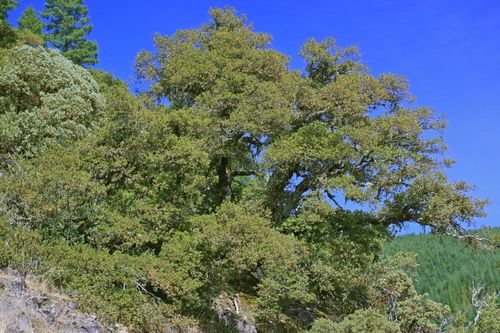 canyon live oak Quercus chrysolepisZone 8+ · 90 ft · tree
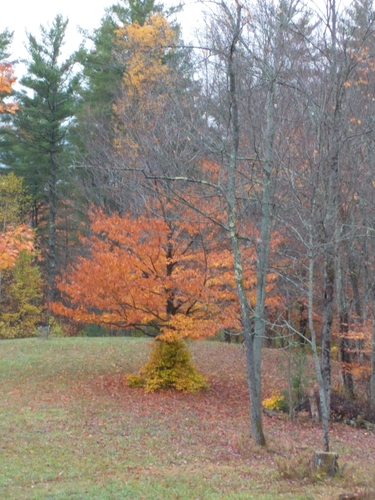 American beech Fagus grandifoliaZone 2+ · 80 ft · tree
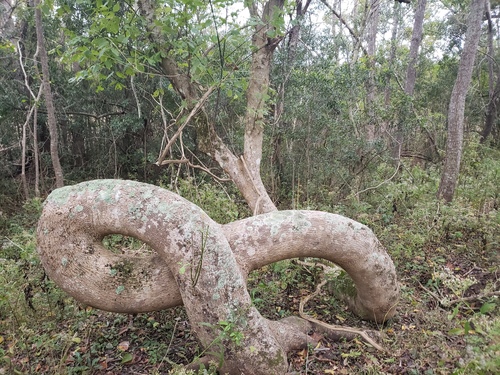 boxelder Acer negundoZone 2+ · 60 ft · tree
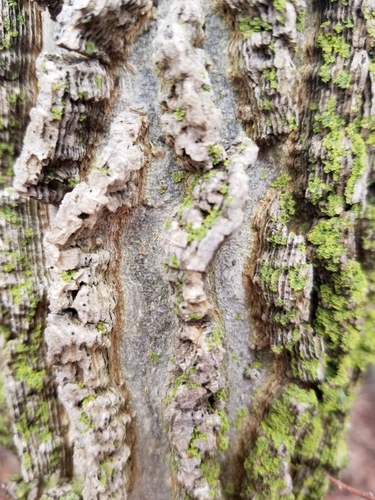 common hackberry Celtis occidentalisZone 2+ · 60 ft · tree
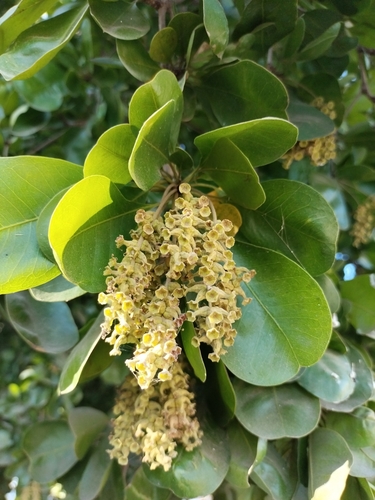 gregorywood Bucida bucerasZone 10+ · 50 ft · tree
Understory — small trees
 eastern redbud Cercis canadensisZone 4+ · 30 ft · tree
 tietongue Coccoloba diversifoliaZone 11+ · 25 ft · tree
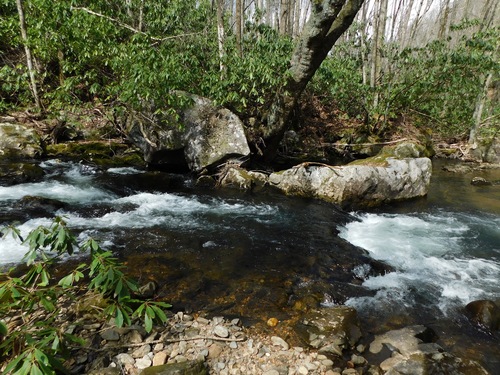 great laurel Rhododendron maximumZone 5+ · 25 ft · treeCaution: USDA flags it allelopathic — it chemically suppresses plants growing beneath it.
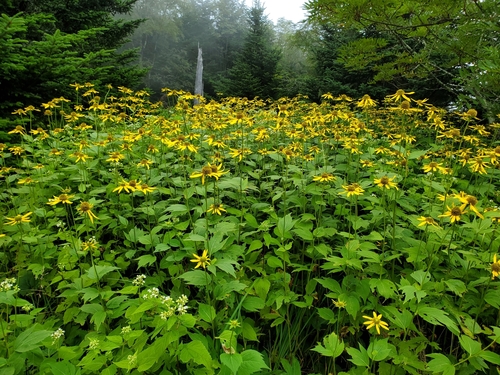 cutleaf coneflower Rudbeckia laciniataZone 3+ · 8.2 ft · perennial
Shrub layer
- Texas redbud Cercis canadensisZone 6+ · 12 ft · shrub
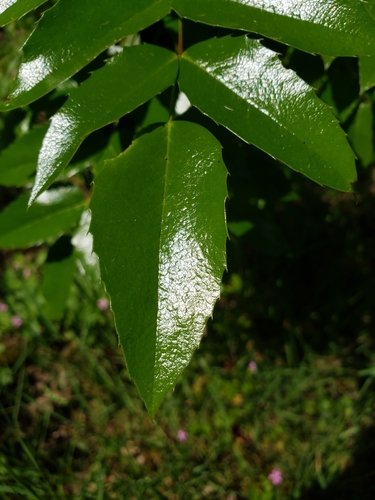 hollyleaved barberry Mahonia aquifoliumZone 2+ · 8 ft · shrub
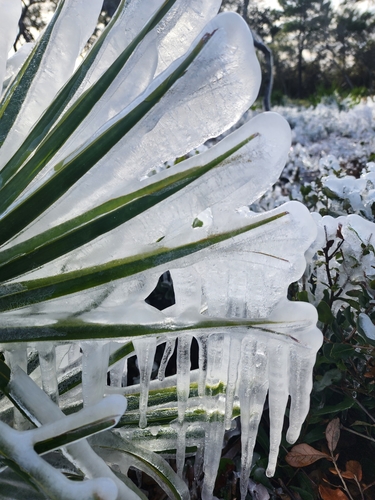 saw palmetto Serenoa repensZone 7+ · 7 ft · shrub
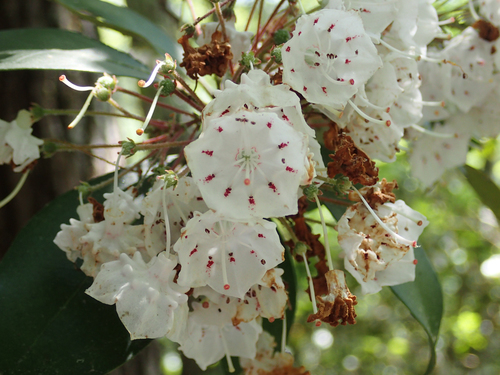 mountain laurel Kalmia latifoliaZone 4+ · 6 ft · shrub
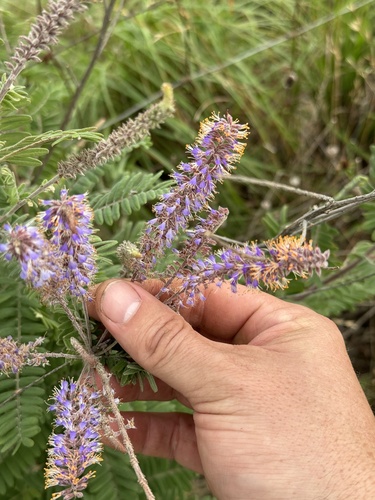 leadplant Amorpha canescensZone 3+ · 4 ft · shrub
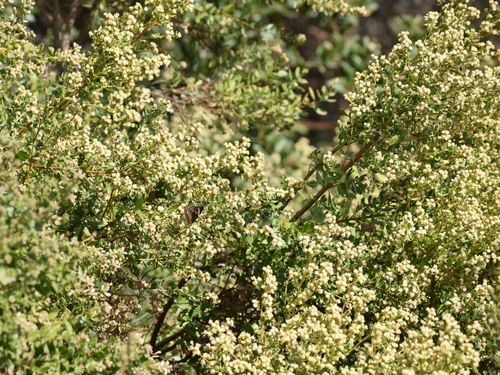 coyotebrush Baccharis pilularisZone 7+ · 3 ft · shrub
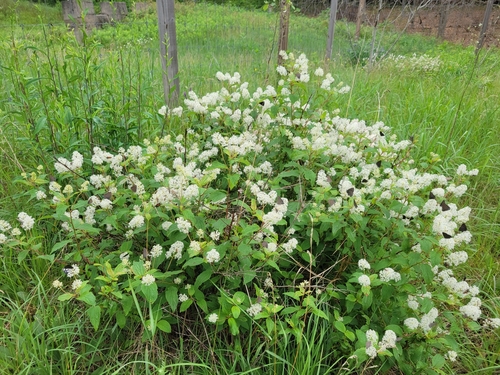 New Jersey tea Ceanothus americanusZone 4+ · 3 ft · shrub
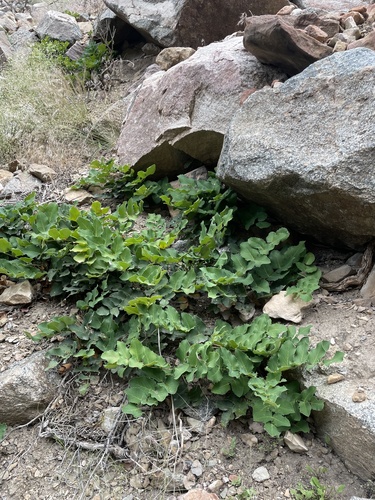 creeping barberry Mahonia repensZone 4+ · 2 ft · shrub
Herb layer — perennials and grasses
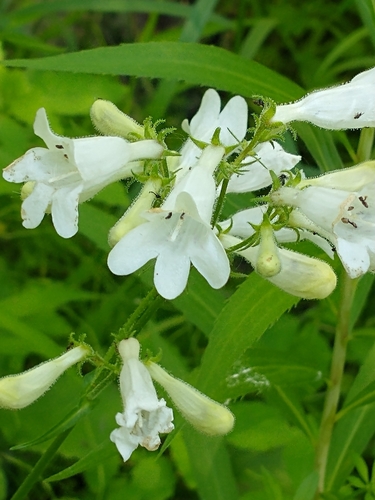 foxglove beardtongue Penstemon digitalisZone 3+ · 4 ft · perennial
 blue wildrye Elymus glaucusZone 3+ · 3.3 ft · grass
Ground cover — under 1.5 ft
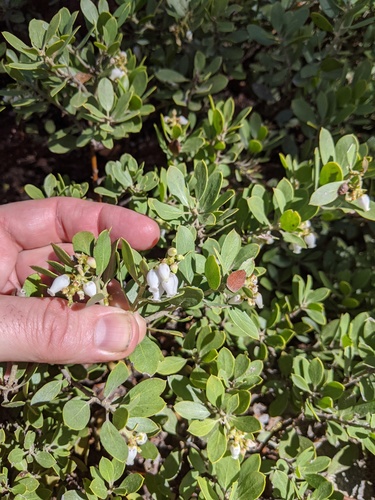 pinemat manzanita Arctostaphylos nevadensisZone 5+ · 2 ft · shrub
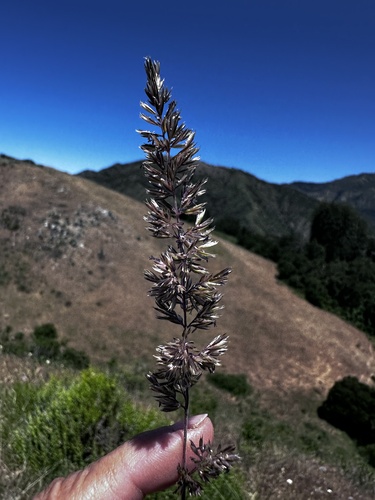 prairie Junegrass Koeleria macranthaZone 3+ · 1.5 ft · grass
- flexible ceanothus Ceanothus ×flexilisZone 4+ · 1 ft · shrub
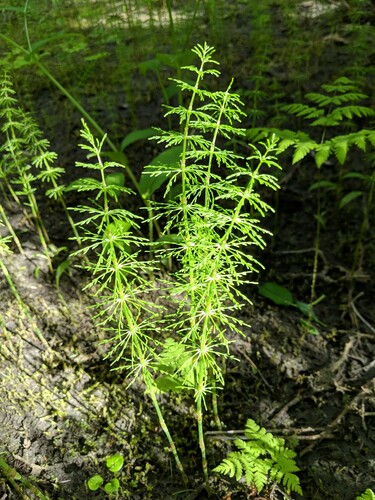 woodland horsetail Equisetum sylvaticumZone 2+ · 0.9 ft · perennial
 prostrate ceanothus Ceanothus prostratusZone 4+ · 0.5 ft · shrub
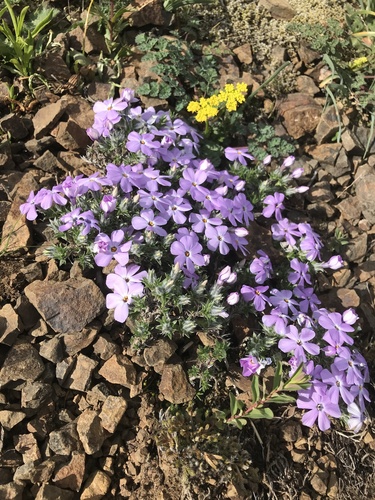 spreading phlox Phlox diffusaZone 5+ · 0.5 ft · perennial
Nitrogen fixers
 wild tantan Desmanthus virgatusZone 8+ · 2 ft · perennial
Read the caveats before you plant. Two entries on this list are the same species. USDA issues separate records for eastern redbud and Texas redbud, both Cercis canadensis, with different mature heights (30 ft and 12 ft) and different cold limits. We keep both rather than silently merging records that USDA distinguishes.
Great laurel (Rhododendron maximum) is flagged allelopathic by USDA — it suppresses plants growing beneath it. It is on this list because it genuinely tolerates dry shade, not because it is a good neighbour. Our Guild Builder excludes allelopathic plants from every companion layer for this reason.
Hardiness zones span 2 to 11 here, so this is a national list, not a regional one. Add your zone in the Plant Finder before you buy anything.
Methodology
Source. Every trait is quoted from the USDA PLANTS database, via
its PlantProfile and PlantCharacteristics endpoints. Nothing
on this page is estimated, imputed or generated. Where USDA publishes no value, we
leave it blank rather than guessing — see data & sources.
"Deep shade" = USDA Shade Tolerance of Low.
This field is counterintuitive: it rates how much light a plant requires, so
Low means it will grow in shade and High means it demands
full sun. Reading the label at face value inverts every light claim you make from it.
We validated the direction against species whose light needs are not in dispute —
eastern hemlock, American beech and sugar maple all come back Low;
sunflower, big sagebrush and little bluestem all come back High.
"Drought tolerant" = USDA Drought Tolerance of
Medium or High; the shortlist uses High only.
We deliberately do not use USDA's Moisture Use field, which is a
measure of how much water a plant consumes relative to its neighbours, not what it
can survive. The two disagree often enough to matter: 43 plants rated low for
moisture use are rated None or Low for drought tolerance.
Atlantic white cedar is the clearest case — a swamp tree with USDA's highest
rating for waterlogged ground and its lowest for drought, yet a low
water-use figure that would have quietly filed it under drought-tolerant.
"Routinely available" = USDA Commercial Availability of
Routinely Available. This is USDA's assessment of the trade, not a survey
of any particular nursery, and it will be more accurate for widely grown natives than
for regional specialities. A plant marked unavailable may still be sold by a
specialist grower near you.
Layers (canopy, understory, shrub, ground cover, nitrogen fixer) are derived by a fixed rule from USDA growth habit and mature height — same inputs, same output, every time. They are labelled derived rather than quoted throughout the site.
Counts were computed on 18 August 2026 against catalogue version 2026-08-18 (2,169 plants). Re-ingesting USDA data changes them; the linked queries always return current figures.
Related
- Best ground covers for shade
- Best drought-tolerant plants
- Guild Builder — pick one of these as a target and build the layers around it
Written and edited by the Understory Guide team. We publish the query behind every number so you can check our work. Corrections: contact us.