northern St. Johnswort
Hypericum boreale · Clusiaceae
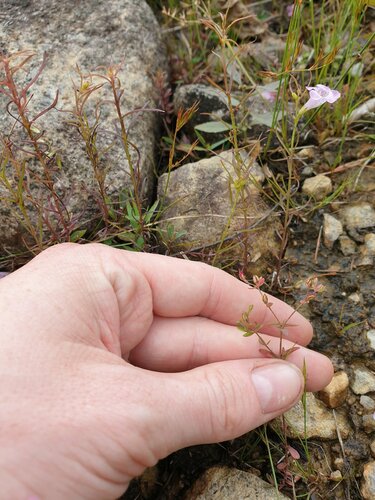
northern St. Johnswort (Hypericum boreale) is a perennial herbaceous plant in the Clusiaceae family. It is native to North America. USDA records it as hardy in zone 3 and warmer, down to about -33°F.
At a glance
| Type | forb-herb USDA |
|---|---|
| Lifecycle | perennial USDA |
| Native status | native USDA |
| Mature height | 0.8 ft USDA |
| Light | part-shade USDA |
| Water need | high USDA |
| Growth rate | moderate USDA |
| Soil pH | 4.4–6 USDA |
| Bloom | June USDA |
| Flower color | Yellow USDA |
| Hardiness zones | 3 and warmer USDA |
| Guild layer | ground-cover Derived |
| Nursery availability | No Known Source USDA |
USDA quoted from the USDA PLANTS database · Derived computed by a fixed rule from those columns. No value on this page is estimated.
Growing conditions
It grows in partial shade. USDA rates it as having needs consistently moist ground. Its drought tolerance is rated none — it needs reliable moisture. It tolerates saturated, poorly drained ground well (USDA rates its anaerobic tolerance high). It is recorded on soils from pH 4.4 to 6 — acidic ground. Its cold limit is zone 3.
Size and growth
At maturity it reaches about 0.8 ft, making it a low, mat-forming plant. It grows at a moderate rate.
Bloom period
USDA records a bloom period of June. Flowers are yellow.
A flowering date, not a pollinator rating.
Foliage, flower and season
Summer foliage is green, coarse in texture. Its flowers are conspicuous. Its active growth period is summer. USDA rates its lifespan as moderate.
What the site needs to provide
USDA records it across sites receiving 30 to 55 inches of annual precipitation. It needs at least 90 frost-free days to finish its season. It roots to at least 8 inches. Fertility requirement: medium.
Propagating it
Sprigs is the only propagation method USDA lists. Seed needs cold stratification — a period of moist chilling — before it will germinate, so sow in autumn or chill it artificially before a spring sowing. Its seed spreads at a slow rate. It spreads vegetatively at a slow rate.
Resilience and wildlife
Its fire tolerance is rated medium. Its growth form is recorded as stoloniferous.
Role in a guild
Ground cover. In a layered planting this is the lowest layer — it shades soil, holds moisture, and suppresses weeds. The layer is derived by a fixed rule from growth habit and mature height.
Tags
Related plants
Others in Hypericum
- tinker's penny Hypericum anagalloides
- great St. Johnswort Hypericum ascyron
- Aaron's beard Hypericum calycinum
- roundpod St. Johnswort Hypericum cistifolium
Similar role and hardiness
- velvet bentgrass Agrostis canina
- American water plantain Alisma subcordatum
- kinnikinnick Arctostaphylos uva-ursi
- golden sedge Carex aurea
- white marsh marigold Caltha leptosepala
Where this data comes from
Every value on this page comes from the USDA PLANTS database record for symbol HYBO2, or is computed from those values by a fixed rule. Nothing here is estimated or model-generated. Where USDA publishes no value, this page omits the claim rather than filling the gap.
- Quoted from USDA PLANTS: active growth period, Bloom, Bloom end, cold stratification, Drought tolerance, fall conspicuous, fertility requirement, fire tolerance, Flower color, flower conspicuous, foliage color, foliage porosity winter, foliage texture, frost free days min, fruit conspicuous, growth form, Growth rate, Hardiness zones, Lifecycle, lifespan, Light, Mature height, Minimum temperature, Native status, Nitrogen fixation, Nursery availability, precipitation max in, precipitation min in, propagation, resprout ability, root depth in, seed spread rate, Soil pH, Soil pH (upper), Tolerance of wet soil, Toxicity, Type, vegetative spread rate, Water need.
- Derived by a fixed rule from those columns: Guild layer.
Read our full data sources and methodology.
Find more plants for your zone with the Plant Finder.